Lactoferrin for Iron Deficiency: When science meets efficacy

Iron deficiency is not necessarily a lack of iron – but often a problem of availability. In this article, we show how inflammation, for example, can block iron metabolism and why lactoferrin specifically addresses this issue to make iron usable in the body again.

Iron deficiency, inflammation, and the role of lactoferrin in our metabolism
The importance of iron in the body
Iron is far more than a trace element - it is a fundamental building block of life. As a core component of hemoglobin, iron enables the transport of oxygen to every single cell in the body. In addition, iron is essential for mitochondrial function (energy production), the synthesis of hormones and neurotransmitters, and a properly functioning immune system. Most importantly, iron is the limiting factor in cell division. Without sufficient iron, no cell can divide or regenerate [1, 2].
Iron deficiency – what are the symptoms?
Because iron plays such a fundamental role, symptoms of iron deficiency are often nonspecific and may be misinterpreted. Typical signs include:
- Chronic exhaustion and profound fatigue
- Poor concentration and memory problems
- Shortness of breath during physical exertion
- Pale skin and mucous membranes
- Hair loss and brittle nails
- Restless legs syndrome (tingling in the legs)
- Weakened immune response
- Unexplained decline in athletic performance [3, 4]
The three-stage model of iron deficiency
In clinical practice, iron deficiency is often only diagnosed once anemia has developed – the final stage of a long process. Two earlier stages are frequently overlooked [5]:
Stage 1: Iron store depletion
Iron stores (ferritin) are depleted, but hemoglobin and blood count remain normal.
Stage 2: Iron-deficient erythropoiesis
Iron supply to bone marrow cells is impaired; red blood cells become smaller and paler without full anemia.
Stage 3: Iron deficiency anemia
The only stage reliably detected in routine diagnostics. It represents the end stage of a long process.
All three groups together affect a surprisingly large portion of the population. Among women of reproductive age, physically active women, and pregnant women, well over 90% are affected by one of these forms of iron deficiency [6, 7].
What Causes Iron Deficiency?
Exercise increases iron demand
The more intense the training, the higher the iron requirement. Contributing factors include:
- Sweating leads to measurable iron loss
- Running causes mechanical destruction of red blood cells (foot strike hemolysis)
- Physical activity increases systemic inflammation, inhibiting iron absorption
Studies show that female endurance athletes are particularly affected by iron deficiency, and optimal iron status directly impacts their performance [8, 9].
Foods that inhibit iron absorption
Certain common foods actively block iron absorption in the intestines:
- Coffee and tea: Polyphenols and tannins bind iron and make it insoluble [10]
- Grains, legumes, nuts: Phytic acid chelates iron and prevents absorption [11]
A typical everyday scenario - oatmeal with coffee - can block a large portion of iron intake and contributes to gradual iron deficiency in millions of people.
Inflammation and iron balance: an evolutionary dilemma
The most important and least known aspect of iron metabolism is its close connection with the immune system. Since iron is the limiting factor for cell division, bacteria and viruses also require iron to multiply. For this reason, the body has developed a defense mechanism:
During inflammation, iron is actively withdrawn from the bloodstream and trapped inside cells [12].
Hepcidin is the key hormone in this mechanism. It is produced in the liver under the influence of pro-inflammatory cytokines - especially interleukin-6 (IL-6) - and blocks the only iron exporter on cell surfaces (ferroportin), causing iron to remain trapped in cells (enterocytes and macrophages). At the same time, iron is transported back into the intestinal lumen - away from invading pathogens [13, 14].
Evolutionary function
Hepcidin protects against infections by making iron inaccessible to pathogens. This mechanism is one of the oldest and most effective defense strategies of the immune system.
The modern iron redistribution problem
In prehistoric times, this mechanism was activated only briefly. The modern world has drastically changed the situation: chronic stress, lack of sleep, highly processed foods, obesity, and intense training without sufficient recovery all continuously activate pro-inflammatory cytokines and therefore hepcidin [15, 16].
The result is paradoxical:
We rarely have iron deficiency due to insufficient intake - instead, we face a major iron redistribution problem.
Iron is present in the body but trapped in cells and unavailable where it is needed most: in the bone marrow for red blood cell production [17].
Free iron supplements: poor therapeutic outcomes
Free (ionic) iron is highly reactive and potentially toxic. It can trigger oxidative stress via the Fenton reaction, damage intestinal cells, and promote inflammation – which further increases hepcidin.
Studies show:
- About one-third of users do not respond (non-responders)
- One-third discontinue use due to side effects
- Only one-third experience moderate effectiveness [18, 19]
Lactoferrin: The Root-Cause Solution
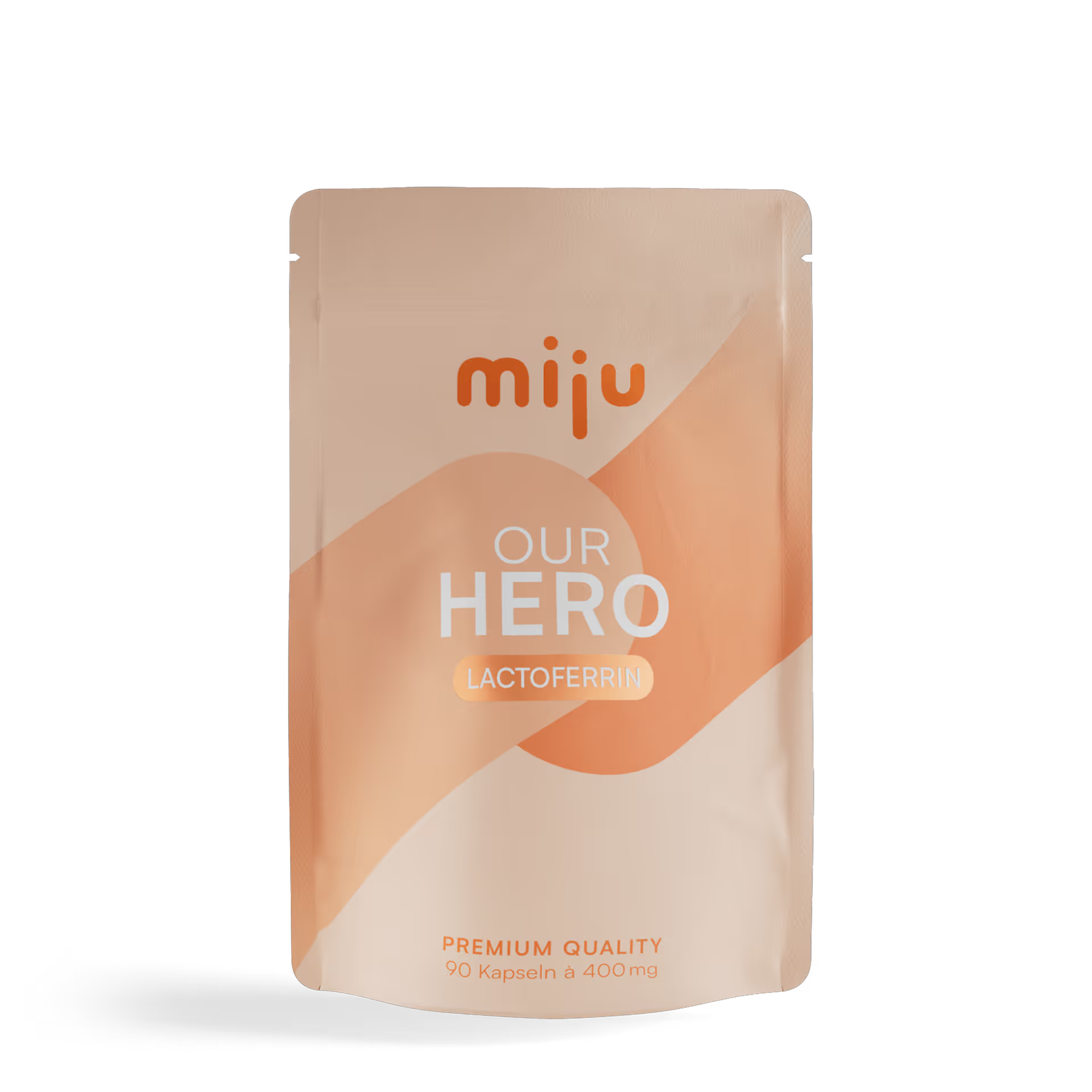
Lactoferrin is a naturally occurring iron-binding glycoprotein from the transferrin family. It is found in breast milk, tears, saliva, and neutrophils and binds iron with very high affinity in a non-toxic form.
It addresses the root cause of iron redistribution through the following mechanisms [20, 21]:
- Lactoferrin inhibits pro-inflammatory cytokines (especially IL-6), directly reducing hepcidin production in the liver [22]
- With lower hepcidin levels, ferroportin becomes active again, allowing iron to be released from cells and used for erythropoiesis [23]
- Lactoferrin-bound iron is absorbed via specific lactoferrin receptors in the intestine - independently of the hepcidin regulatory pathway and without free iron ions [24]
- Due to its anti-inflammatory effect, lactoferrin breaks the vicious cycle:
Less inflammation → less hepcidin → better iron distribution → more red blood cells → more energy [25, 26]
Lactoferrin does not address the symptom but the underlying mechanism. In cases of elevated soluble transferrin receptor (sTfR), additional supplementation with highly bioavailable iron (heme form or lactoferrin-bound) may be useful [27].
Natural iron sources compared
- Non-heme iron
- Source: Legumes, spinach, seeds, tofu
- Evaluation: Low bioavailability (2–10%); no toxic effects; absorption enhanced by vitamin C
- Heme iron
- Source: Red meat, liver, organ meats
- Evaluation: High bioavailability (15–35%); hepcidin-independent absorption; high consumption associated with health risks
- Free iron salts
- Source: Ferrous sulfate, gluconate, fumarate (supplements)
- Evaluation: Fenton reaction; oxidative stress; promotes inflammation; increases hepcidin; poor therapeutic profile
Supporting nutrients for healthy erythropoiesis
Iron alone is not sufficient for healthy red blood cell production. Two additional nutrients are crucial:
- Vitamin B12: Essential for DNA synthesis in bone marrow cells. Optimal levels are >500 pg/ml - standard reference ranges often underestimate actual needs [28, 29]
- Folate (Vitamin B9): Works closely with B12 and is necessary for cell division in the bone marrow [30]
Recommendation
Take 800 mg of lactoferrin daily and combine it with an iron-rich diet. Ideally, this should include a balanced mix of plant-based and animal protein sources. Also make sure your body receives sufficient amounts of vitamin B12 and folic acid. These essential nutrients can be obtained through your diet or, if needed, through supplements.
Important note: Anyone suffering from iron deficiency without knowing the cause should seek medical evaluation. In some cases, iron deficiency may indicate an underlying medical condition.
Literature
1. Abbaspour N, Hurrell R, Kelishadi R. Review on iron and its importance for human health. J Res Med Sci. 2014;19(2):164-174.
2. Andrews NC. Disorders of iron metabolism. N Engl J Med. 1999;341(26):1986-1995.
3. Pasricha SR, Tye-Din J, Muckenthaler MU, Swinkels DW. Iron deficiency. Lancet. 2021;397(10270):233-248.
4. Beard JL. Iron biology in immune function, muscle metabolism and neuronal functioning. J Nutr. 2001;131(2S-2):568S-580S.
5. Cook JD. Diagnosis and management of iron-deficiency anaemia. Best Pract Res Clin Haematol. 2005;18(2):319-332.
6. Camaschella C. Iron deficiency. Blood. 2019;133(1):30-39.
7. Milman N. Prepartum anaemia: prevention and treatment. Ann Hematol. 2008;87(12):949-959.
8. Burden RJ, Morton K, Richards T, Whyte GP, Pedlar CR. Is iron treatment beneficial in, iron-deficient but non-anaemic (IDNA) endurance athletes? A systematic review and meta-analysis. Br J Sports Med. 2015;49(21):1389-1397.
9. Clénin GE. The treatment of iron deficiency without anaemia (in otherwise healthy persons). Swiss Med Wkly. 2017;147:w14434.
10. Morck TA, Lynch SR, Cook JD. Inhibition of food iron absorption by coffee. Am J Clin Nutr. 1983;37(3):416-420.
11. Hallberg L, Hulthen L. Prediction of dietary iron absorption: an algorithm for calculating absorption and bioavailability of dietary iron. Am J Clin Nutr. 2000;71(5):1147-1160.
12. Drakesmith H, Prentice AM. Hepcidin and the iron-infection axis. Science. 2012;338(6108):768-772.
13. Nemeth E, Tuttle MS, Powelson J, et al. Hepcidin regulates cellular iron efflux by binding to ferroportin and inducing its internalization. Science. 2004;306(5704):2090-2093.
14. Ganz T, Nemeth E. Hepcidin and iron homeostasis. Biochim Biophys Acta. 2012;1823(9):1434-1443.
15. Weiss G, Ganz T, Goodnough LT. Anemia of inflammation. Blood. 2019;133(1):40-50.
16. Aapro M, Beguin Y, Bokemeyer C, et al. Management of anaemia and iron deficiency in patients with cancer. Ann Oncol. 2018;29(Suppl 4):iv96-iv110.
17. Fraenkel PG. Anemia of inflammation: a review. Med Clin North Am. 2017;101(2):285-296.
18. Tolkien Z, Stecher L, Mander AP, Pereira DI, Powell JJ. Ferrous sulfate supplementation causes significant gastrointestinal side-effects in adults: a systematic review and meta-analysis. PLoS ONE. 2015;10(2):e0117383.
19. Schrier SL, Auerbach M. Treatment of iron deficiency anemia in adults. UpToDate. 2023.
20. Lepanto MS, Rosa L, Paesano R, Valenti P, Cutone A. Lactoferrin in aseptic and septic inflammation. Molecules. 2019;24(7):1323.
21. Drago-Serrano ME, de la Garza-Amaya M, Luna JS, Campos-Rodriguez R. Lactoferrin-lipopolysaccharide (LPS) binding as key to antibacterial and antiendotoxic effects. Int Immunopharmacol. 2012;12(1):1-9.
22. Nishimura I, Inoue N, Yonezawa S. Lactoferrin inhibits interleukin-6 production in a human monocyte-like cell line. Biosci Biotechnol Biochem. 2004;68(6):1423-1425.
23. Valore EV, Ganz T. Posttranslational processing of hepcidin in human hepatocytes is mediated by the prohormone convertase furin. Blood Cells Mol Dis. 2008;40(1):132-138.
24. Lönnerdal B. Bioactive proteins in human milk: health, nutrition, and implications for infant formulas. J Pediatr. 2016;173(Suppl):S4-S9.
25. Cutone A, Rosa L, Lepanto MS, et al. Lactoferrin efficiently counteracts the inflammation-induced changes of the iron homeostasis system in macrophages. Front Immunol. 2017;8:705.
26. Paesano R, Berlutti F, Pietropaoli M, et al. Lactoferrin efficacy versus ferrous sulfate in curing iron disorders in pregnant and non-pregnant women. Int J Immunopathol Pharmacol. 2010;23(2):577-587.
27. Zlotkin S, Arthur P, Antwi KY, Yeung G. Treatment of anemia with microencapsulated ferrous fumarate plus ascorbic acid supplied as sprinkles to complementary (weaning) foods. Am J Clin Nutr. 2001;74(6):791-795.
28. Carmel R. Subclinical cobalamin deficiency. Curr Opin Gastroenterol. 2012;28(2):151-158.
29. Allen LH. Vitamin B-12. Adv Nutr. 2012;3(1):54-55.
30. Bailey LB, Stover PJ, McNulty H, et al. Biomarkers of nutrition for development — folate review. J Nutr. 2015;145(7):1636S-1680S.