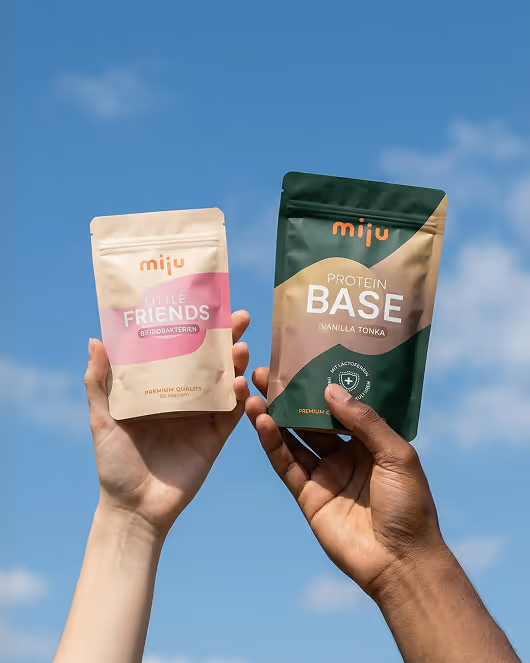
Understanding Protein: When science meets efficacy
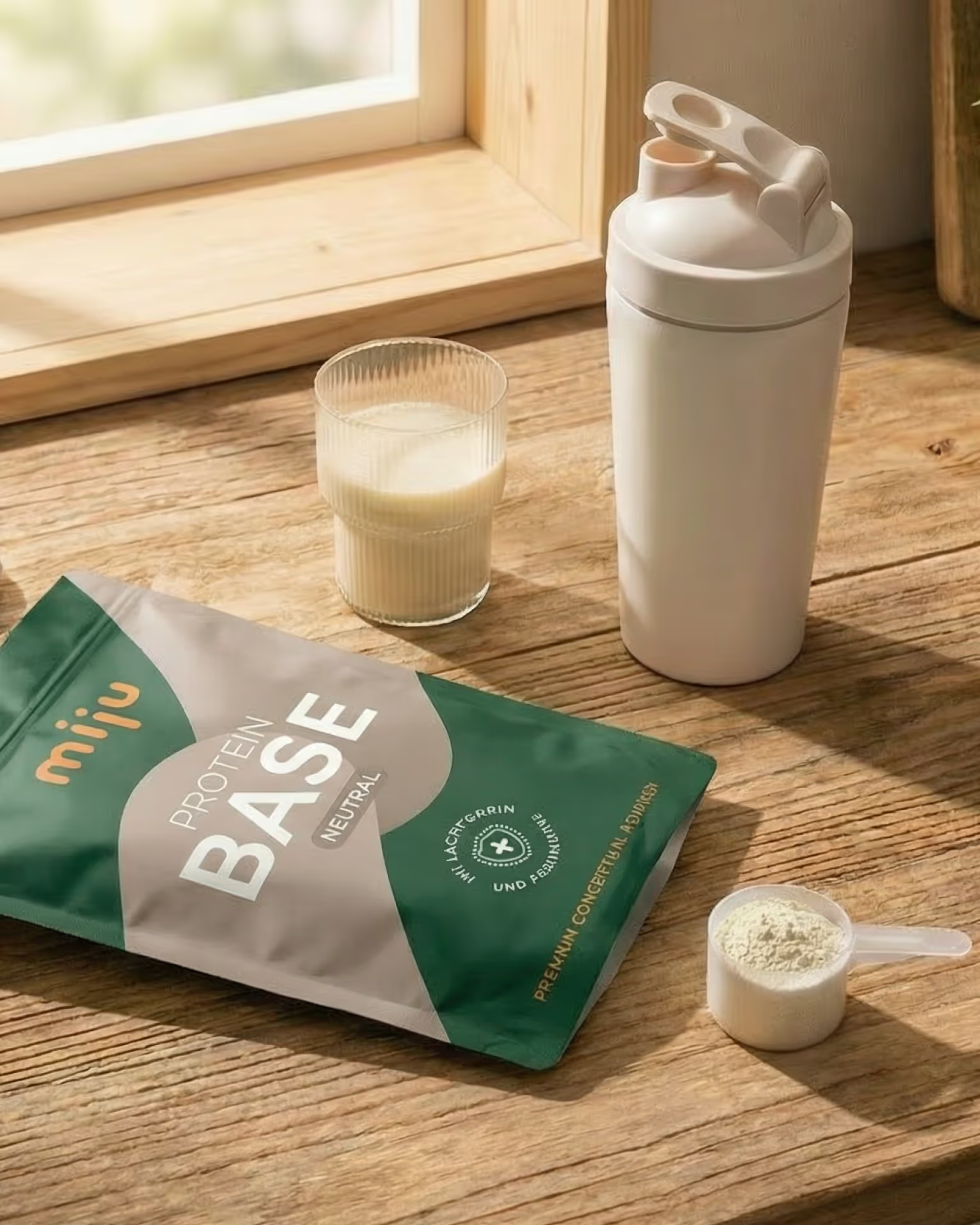
There is an overwhelming number of protein supplements and protein types on the market. That’s exactly why it’s important to understand the differences - and which protein aligns with your goals. Here, we provide the key information you need to navigate the protein jungle with confidence.


Protein is not just Protein
A look at one of the most valuable nutrients for humans quickly shows that protein is not all the same: Around 70% of the protein found in breast milk consists of whey protein a fast-absorbing protein that quickly supplies the body with amino acids. The remaining 30%, mainly casein, makes the difference: it is digested more slowly, ensuring a sustained supply, while whey is rapidly available.
Clinical studies show that proteins from milk are particularly well absorbed by the body - better than any other protein source. They effectively support the development and maintenance of lean body mass - from muscles and connective tissue to tendons and ligaments.
Animal Protein vs. Plant Protein
In nearly all studies, milk proteins (casein and whey) - and therefore animal proteins - outperform plant proteins, especially in terms of protein synthesis, digestibility, and amino acid profile. One reason lies in the natural synergy between these two protein types: while whey protein acts quickly, casein provides a prolonged supply. Interestingly, in cow’s milk this ratio is reversed, with about 80% casein and 20% whey - a detail that is crucial to its unique effect.
A key mechanism behind this is mTOR (mechanistic Target of Rapamycin) - a protein in our cells that regulates cell growth, cell division, and energy balance. Milk proteins can activate this process particularly effectively - even more so than pure whey protein - despite having a lower leucine content. This makes them especially valuable for building lean body mass.

Milk Protein vs. Whey Protein: the key differences
Although both come from the same source - milk - they differ significantly in how they affect the body.
Milk Protein: long-term supply and protection
Milk protein includes the full protein content of milk and consists of roughly 80% casein and 20% whey. Due to its high casein content, it is digested more slowly, supplying the body with essential amino acids continuously over a period of 2 to 6 hours. This results in:
- long-lasting satiety
- steady support for muscles and tissue
- an anti-catabolic effect (protection against muscle breakdown)
Additionally, milk protein may increase resting metabolic rate (RMR) and typically contains more glutamine or glutamic acid.
Whey Protein: fast action for recovery and muscle growth
Whey protein is absorbed much faster - usually within 45 minutes to 2 hours. This leads to a rapid rise in amino acids in the bloodstream and makes whey protein particularly effective for:
- fast recovery after training
- targeted muscle building
- short-term activation of protein synthesis
Whey protein also increases insulin levels more strongly, contains more BCAAs and cysteine, and is considered more immunologically neutral - partly due to components such as lactoferrin.
How much Protein do you really need?
Daily protein requirements are individual and depend on factors such as activity level, training, and goals. However, there are some clear guidelines.
Protein intake or amino acid intake alone increases muscle building and muscle protein synthesis in the body. Combined with training, this effect is further enhanced - especially when protein is consumed after exercise.
Weight Loss vs. Body Composition: the key difference
Many people want to lose weight or maintain it. But losing weight is not the same as improving body composition: often, too much focus is placed on weight loss alone.
The problem: Traditional calorie-deficit diets often lead not only to fat loss but also to a loss of lean mass - muscles, tendons, and connective tissue. This promotes the yo-yo effect, making weight regain after dieting almost inevitable.
The real goal should therefore be:
Build more lean body mass - not just lose weight.
This is what ultimately leads to a long-term reduction in body fat. Important: the scale can be misleading. Especially in the beginning, fat loss and muscle gain often balance each other out, meaning body weight may stay the same.
Recommended daily protein intake
The official recommendation (RDA – Recommended Daily Allowance) is 0.8 g of protein per kg of body weight per day. This estimate is based on nitrogen balance in healthy adults, but there is no clear evidence that this measurement reliably determines actual needs.
Current findings on protein intake show:
- Below 0.9 g/kg/day, muscle loss can occur without training
- With strength training, as little as 0.6 g/kg/day may be enough to maintain muscle mass
- For muscle growth, at least 1.2 g/kg/day is recommended
This means we need more protein if we do not engage in strength training. With strength training, we need at least 0.6 g/kg body weight to maintain muscle mass - but minimum intake is far from optimal intake.
In other words, at least 1.2 g/kg/day is required for muscle gain. After all, the goal is not just to maintain muscle - but to build it.
So:
- Without strength training, you need more protein to prevent muscle loss
- With training, your protein needs increase significantly for optimal muscle growth
In practice, if you eat a balanced diet, consume 20–40 g of protein after training, and include a protein-rich meal in the evening, you will usually meet your protein needs. Four shakes, ultra-lean protein sources, and excessive amounts of low-fat quark are not necessary.
Quality starts in production
The quality of milk protein doesn’t begin at the final processing step - it starts with fresh skimmed milk. Our milk and whey come from carefully selected, long-term partners who ensure the highest raw material quality. Only the best raw materials can result in a product that excels in function, digestibility, and nutritional profile.
As a manufacturer, we process this fresh skimmed milk using state-of-the-art filtration and drying technologies to create our high-quality milk protein concentrates. The result: a functional protein in its natural composition and structure - approximately 80% casein and 20% whey - just as it occurs in milk.
Our gentle production process is crucial:
- sensitive protein structures are preserved
- absorption and utilization in the body are optimized
- lactose content is reduced
- natural milk calcium content is retained
Conclusion: The right Protein for your goal
Proteins are a central building block for your health and performance - not just for athletes. What matters is not only the quantity, but also the quality and type of protein.
- Milk protein provides long-term supply and protection
- Whey protein is ideal for fast effects around training
- The optimal choice and combination depend on your lifestyle and goals
Those who understand the basics automatically make better decisions - without getting lost in the protein jungle.
Literature
Witard, OC, Wardle SL, Macnaughton LS, Hodgson AB, and Tipton KD Protein considerations for optimizing skeletal muscle mass in healthy young and older adults. 2016. Nutrients 8.
Moore DR, Churchward-Venne TA, Witard O, Breen L, Burd NA, Tipton KD, et al. Protein ingestion to stimulate myofibrillar protein synthesis requires greater relative protein intakes in healthy older versus younger men. 2015 J. Gerontol. A Biol. Sci. Med. Sci. 70: 57–62.
Moberg M, Apro W, Ohlsson I, Ponten M, Villanueva A, Ekblom B, et al. 2014. Absence of leucine in an essential amino acid supplement reduces activation of mTORC1 signalling following resistance exercise in young females. Appl. Physiol. Nutr. Metab. 39: 183–194.
Schoenfeld BJ, Aragon AA. How much protein can the body use in a single meal for muscle-building? Implications for daily protein distribution. J Int Soc Sports Nutr. 2018 Feb 27; 15:10.
Macnaughton LS, Wardle SL, Witard OC, McGlory C, Hamilton DL, Jeromson S, Lawrence CE, Wallis GA, Tipton KD. The response of muscle protein synthesis following whole-body resistance exercise is greater following 40 g than 20 g of ingested whey protein. 2016. Physiol Rep. Aug; 4 (15).
Trommelen J, van Lieshout GAA, Nyakayiru J, Holwerda AM,Smeets JSJ, Hendriks FK, van Kranenburg JMX, Zorenc AH, Senden JM, Goessens JPB, Gijsen AP, and van Loon LJC. The anabolic response to protein ingestion during recovery from exercise has no upper limit in magnitude and duration in vivo in humans. 2023. Cell Rep Med Dec 19; 4 (12): 101324.