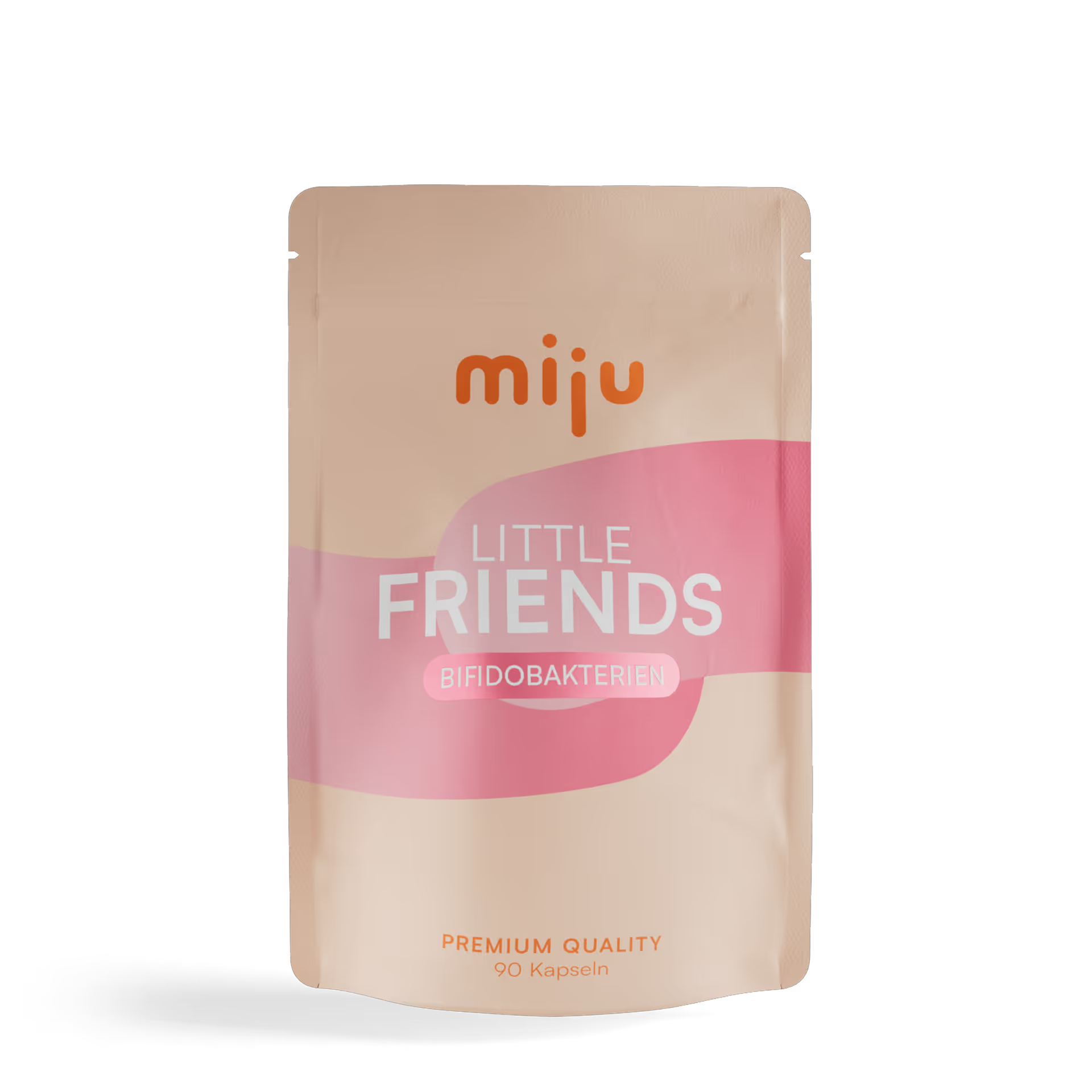
Little Friends Bifidobacteria: When science meets efficacy
%20(1).jpg)
What are bifidobacteria and why are they so important for human health? In this article, we explore their role in the gut microbiome, explain the gut microbiome and its importance for the immune system, and show how probiotics can meaningfully support it as a supplement.

Gut bacteria - little helpers with a big impact
The human gut is the most densely populated place on earth. This is a statement worth reflecting on in order to fully grasp its significance. The totality of microorganisms living in our intestines, such as bacteria and fungi, is called the microbiome. It contains more cells than the human body itself, even though it accounts for only a tiny fraction of total body mass. Given these numbers, it is hardly surprising how strongly fluctuations and changes in the gut microbiome can affect the entire body, as well as our behavior and mood.
Our gut microbiome - a world of its own
Every person has a unique gut microbiome that is as individual as a fingerprint. However, just as a fingerprint is unique, its basic functions are similar in all people - and the same applies to gut bacteria.
Within the gut, symbiotic (“beneficial”) bacteria support digestion and nutrient absorption and help improve intestinal motility and function. This means that no matter how well you eat, it is the gut microbiome that determines whether nutrients actually reach the body. Even more, gut bacteria are involved in how well the intestines move, i.e. how long food remains in the digestive tract. If there are imbalances in this area, it can quickly and clearly manifest in corresponding digestive symptoms.
Another important aspect is the breakdown of food-derived opioid-like compounds, as certain commonly consumed foods such as grains (gliadorphin) and milk (casomorphin) contain morphine-like substances. These are often consumed frequently in modern diets and are sometimes associated with increased pain sensitivity, neurological issues, and digestive discomfort. This can create the impression that certain foods are poorly tolerated - a topic that has become increasingly common in today’s world.

Gut bacteria and their importance for a healthy immune system
It becomes less clear in the context of immune defense, as around 80% of the immune system is located in the gut. Here, gut bacteria help strengthen the intestinal barrier, providing protection against pathogens. A stable barrier prevents bacteria and viruses from entering in the first place, acting as the immune system’s first line of defense and ensuring that the immune response does not need to be activated unnecessarily.
Gut bacteria also produce many health-relevant substances and synthesize vitamins and hormones, such as vitamin B12 or the “feel-good hormone” serotonin. When imbalances occur at this level, it becomes more difficult to directly attribute them to gut bacteria - yet they can significantly affect mood and overall well-being.
The gut microbiome and its effects beyond the gut
And its influence extends far beyond the gut: our microbiome generally supports the immune system, affects the function of the brain, liver, kidneys, skin, and vaginal tract, and influences circulating blood lipids.
A closer look at the diversity of these functions provides many good reasons to ensure that gut bacteria - our little helpers - are well cared for, properly nourished, and able to grow and thrive in the right balance. When this is the case, we as a human “superorganism” are best equipped to face all the challenges life presents.
A complex society - our microbiome and us in the middle
Our gut microbiome is highly complex, and we may never fully understand all the interactions between thousands of different species. However, all families of symbiotic (“beneficial”) gut bacteria share one thing in common: their preference for an acidic environment. Most people are familiar with the acid mantle that surrounds the skin and inhibits the growth of harmful bacteria. The intestinal environment should also become progressively more acidic along its course.
Due to modern lifestyles with high carbohydrate intake and stress, a too alkaline gut environment can be observed in almost all people in industrialized countries. In other words, most individuals would likely benefit from a slightly more acidic gut environment. The part of our microbiome responsible for acidifying the gut is called the acid-forming flora. The two most prominent representatives are lactobacilli, which produce lactic acid to lower pH, and bifidobacteria, which additionally produce acetic acid, an even more potent acidifier.
Bifidobacteria - acetic acid makes the key difference in the gut microbiome
Bifidobacteria are among the “beneficial” gut bacteria closely linked to our immune system. They produce organic acids (e.g. acetic acid) that positively influence the gut microbiome and inhibit the growth of undesirable microbes. A balanced population of bifidobacteria can help stabilize the gut flora and strengthen the body’s defenses.
Acetic acid not only acts as an antimicrobial agent against potentially harmful bacteria (pathogens), but also improves intestinal motility and the barrier function of the gut lining. It has anti-inflammatory properties and may gently regulate blood sugar through the activation of GLP-1.
These beneficial effects on the gut microbiota, immune defense, and even weight management make bifidobacteria a valuable opportunity for greater well-being. However, caution is needed: over the course of life, their proportion in the gut naturally declines significantly. If bifidobacteria are lacking, the microbiome can fall out of balance.
Probiotics as a supplement for a healthy gut microbiome
In general, probiotics - the beneficial gut bacteria - are classified by genus, species, and strain. The most common types are bifidobacteria and lactobacilli. The biological effects of probiotics are strain-specific. However, the safety and clinical effects of one strain cannot simply be transferred to another.
An increasing body of scientific evidence points to the superior health benefits of probiotics of human origin - human-residential bifidobacteria (HRB) adapted to the human host.
Therefore, it is important to select a probiotic strain of human origin that has a high survival rate and clinically documented safety data as well as tested health effects.
It is also important to emphasize that with probiotics, the effective dose can vary significantly. More is not always better.
A well-considered supplementation combined with a healthy lifestyle allows probiotics - our little friends - to develop optimally, leading to maximum benefits for us and our well-being.
Literature
Yatsunenko T, et al. Human gut microbiome viewed across age and geography. Nature. 2012;486(7402):222–227.
Louis P, Flint HJ. Formation of propionate and butyrate by the human colonic microbiota. Environ Microbiol. 2017;19(1):29–41.
Facchin S, et al. Short-Chain Fatty Acids and Human Health. Life (Basel). 2024;14(5):559.
Hasan N, Yang H. Factors affecting the composition of the gut microbiota, and its modulation. PeerJ. 2019.
Wong CB, Odamaki T, Xiao JZ. Human-Residential Bifidobacteria (HRB). FEMS Microbiol Rev. 2020;44(3):369–385.